Best Beginner Flex Fountain Pen? Comparing the Majohn Steel Flex Nib, FPR Ultra Flex Nib, Pilot 912 FA Nib and FPnibs Modified Jowo Semi-Flex Nib
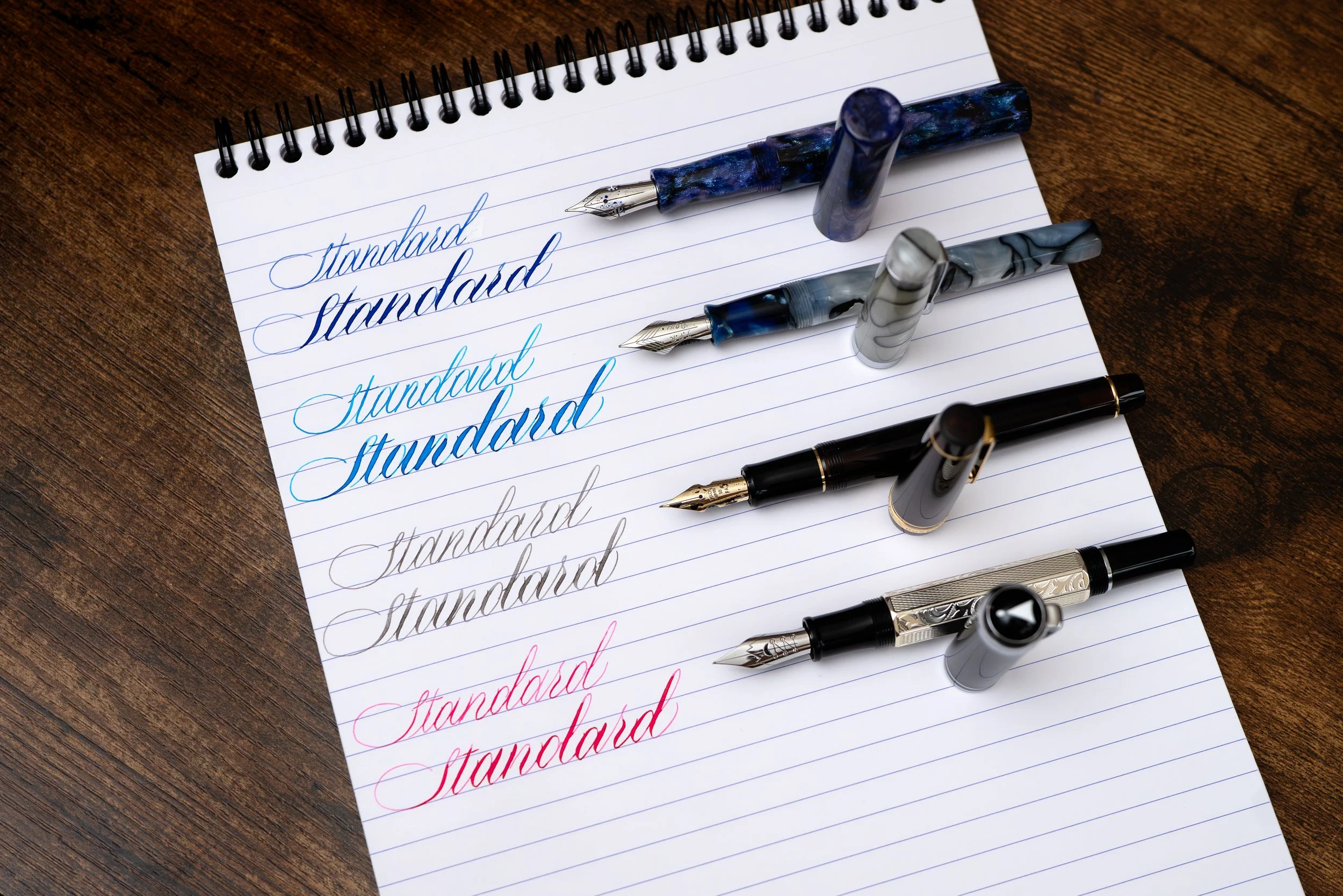
For years, anyone looking for a beginner-friendly modern flex fountain pen was usually pointed toward two options, either Fountain Pen Revolution (FPR) Ultra Flex Nib or Pilot Custom 912 with the 14k FA nib. These 2 are also my usual go-to recommendations.
Recently, another modern flex nib has entered the conversation. As one of the major Chinese pen manufacturers, Majohn produced a steel flex nib at roughly a fraction of the price of the Pilot and with surprisingly respectable performance. It has quickly become one of the most talked-about modern flex nibs. (I have written a detailed review about the Majohn flex nib for those who are interested in learning more about this nib.)
There is also one pen that I rarely see discussed alongside these three, which is FPnibs modified Jowo steel semi-flex nib. This is not the generic Jowo steel soft nib, elastic nib or the so-called ‘flex’ nib that are provided by brands like Esterbrook, Benu, Opus 88, Leonardo, etc. Instead, this is a custom modified version by Pablo from FPnibs. In my opinion, it deserves far more attention, especially for writers in Europe looking for an affordable entry into modern flex nibs.
In this blog post, I want to compare them side-by-side, not simply by assigning scores, but I want to share more of my thoughts about them, including how I would choose each pen with different writing scenarios.
Comparison at a Glance

Before we get started, here is a comparison table summarizing the key flex characteristics of each nib. The measurements represent my best attempt at objectively comparing their performance.
These measurements are certainly important. However, numbers alone rarely answer the question that beginners actually ask when choosing their first flex fountain pen.
Ultimately, the most important question isn't which flex nib is the best, but rather:
What do you want to achieve with your flex fountain pen?
Your answer will likely determine which pen is right for you.
FPnibs Modified Jowo Steel Semi-Flex Nib – An Underrated Option
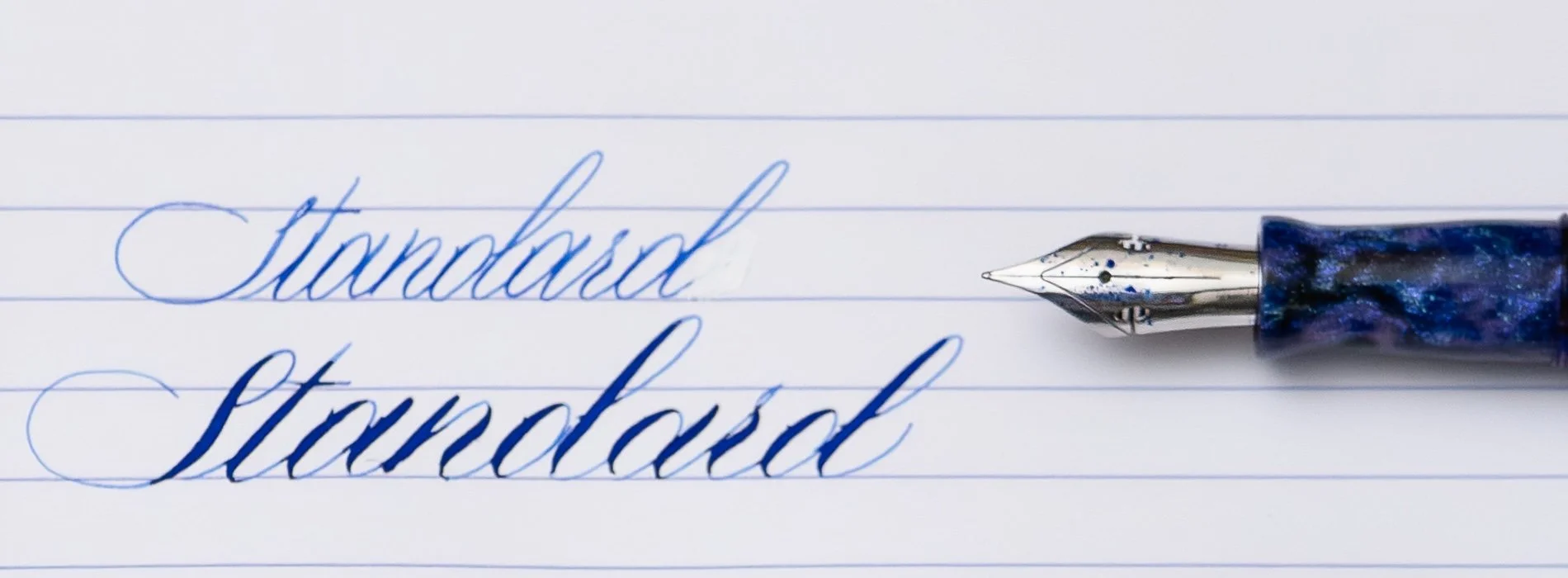
Paper: Rhodia A4 lined paperpad; Ink: Kobe #50 Kyomachi Legend Blue
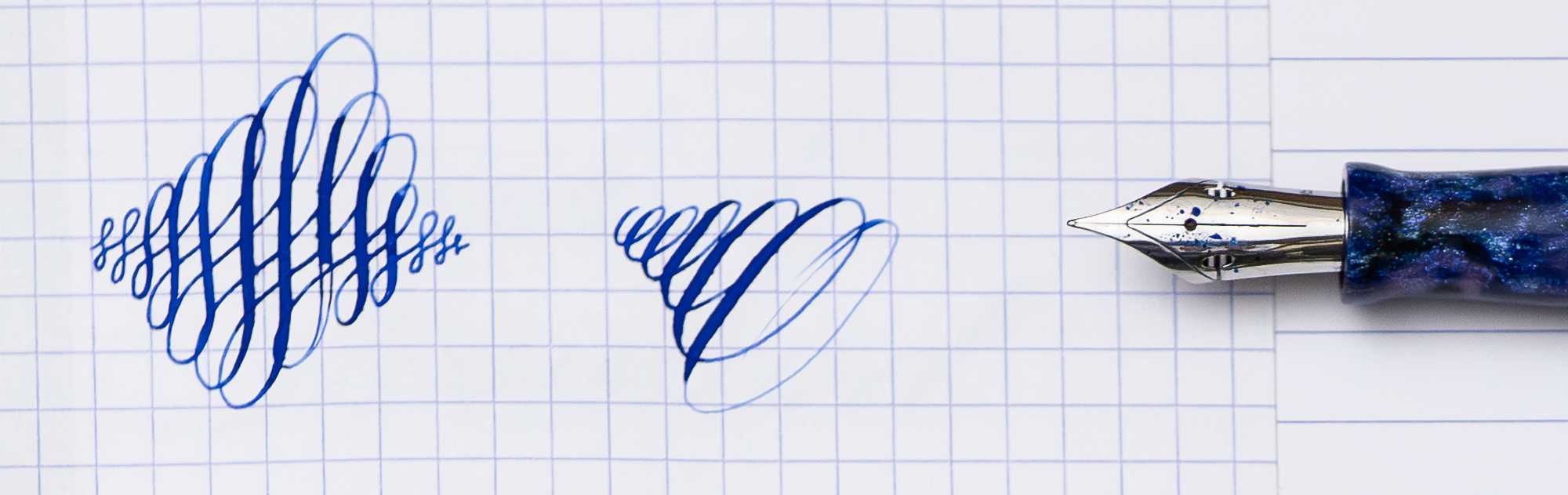
Paper: Rhodia A4 grid paperpad; Ink: Kobe #50 Kyomachi Legend Blue
The FPnibs steel semi-flex nib doesn't receive nearly as much attention as the other three.
I think that's unfortunate.
My first impression of this pen is that it feels much closer to the Pilot FA and specifically Pilot 743 FA nib. It has a very similar amount of resistance when achieving maximum line variation but it is a bit easier to start spreading the tines. It has the same line width as the Pilot #15 size FA nib as well.
It offers pleasant feedback and enough line variation to make everyday handwriting noticeably more expressive. It makes a great semi-flex nib for the majority of writers.
One feature I particularly appreciate is the range of nib sizes available on FPnibs website. Mine came with the standard EF tipping, although Pablo also offers optional regrinds such as EEF, italic, and cursive italic for an additional fee. The high-flow modification to the plastic feed also helps to minimize railroading. I usually only flex to what my writing samples show and I have no railroading issue with that amount of line variation.
Pros
Affordable (under 30 euro for the nib unit)
Jowo nib unit and compatible to most Jowo housing pens
Multiple nib sizes/tipping options
Pleasant feedback
Plastic feed performs surprisingly well
Optional ebonite feed upgrade
Balanced between everyday writing and expressive handwriting
Cons
Its snapback is noticeably slower than the Pilot and feels closer to the Majohn. Like the Majohn, it is better described as a semi-flex nib than a true full-flex nib.
Fountain Pen Revolution Steel Ultra Flex Nib – For Those Who Want Maximum Line Variation
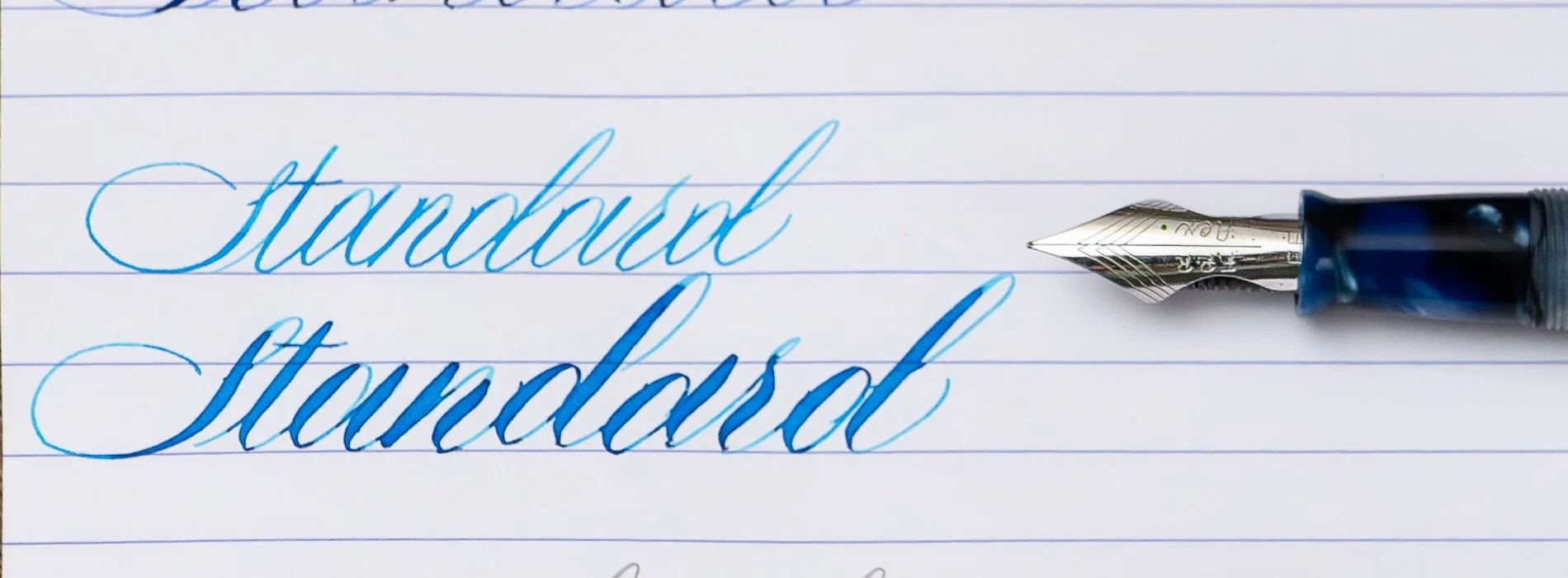
Paper: Rhodia A4 lined paperpad; Ink: Robert Oster Australian Sky Blue
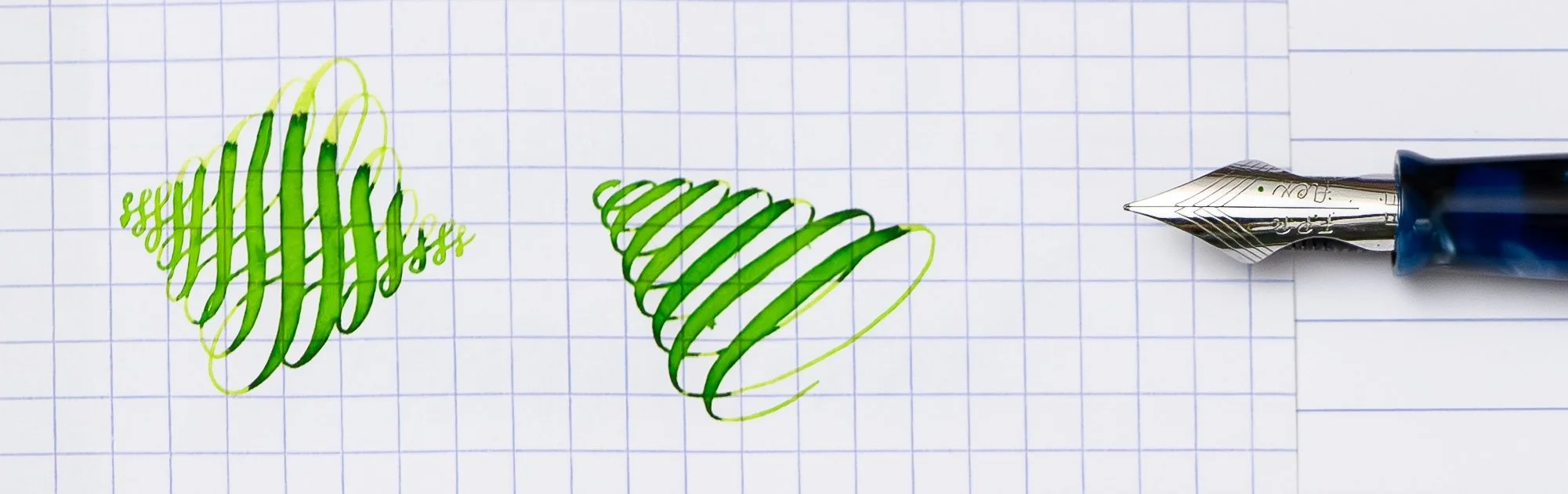
Paper: Rhodia A4 grid paperpad; Ink: Diamine Jade Green
If your primary goal is dramatic line variation, the FPR Ultra Flex remains incredibly difficult to beat, especially at its price. Among the four pens in this comparison, it delivers the closest experience to a true full-flex nib. It is soft and opens easily. It produces expressive calligraphy with relatively little effort.
For someone interested primarily in Copperplate, Spencerian, or decorative writing, this is still one of the strongest values available today.
Pros
Exceptional line variation
Excellent softness
Outstanding value
Purpose-built for expressive writing
At this price point, there really isn't another modern flex nib that provides this combination of softness and line variation.
Cons
Unfortunately, the nib is only part of the writing experience. The pen itself often requires considerably more troubleshooting than the others. Depending on the model and feed combination, you may encounter:
inconsistent ink flow
ebonite feed adjustments
plastic pen body may crack or leak
I recommend getting this nib in their Jowo ebonite feed nib unit and put it in one of your better made Jowo housing pens.
Pilot Custom 912 FA – The Premium Everyday Flex Experience
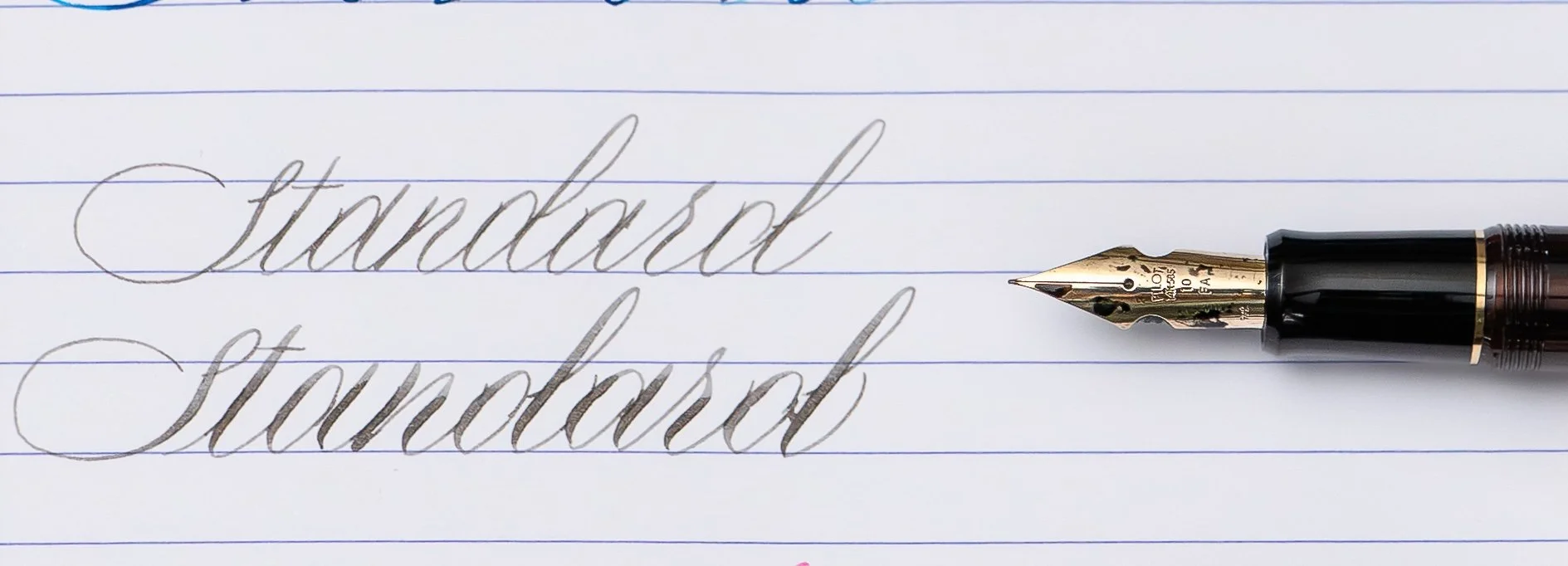
Paper: Rhodia A4 lined paperpad; Ink: Ferris Wheel Press Leadcast Letters
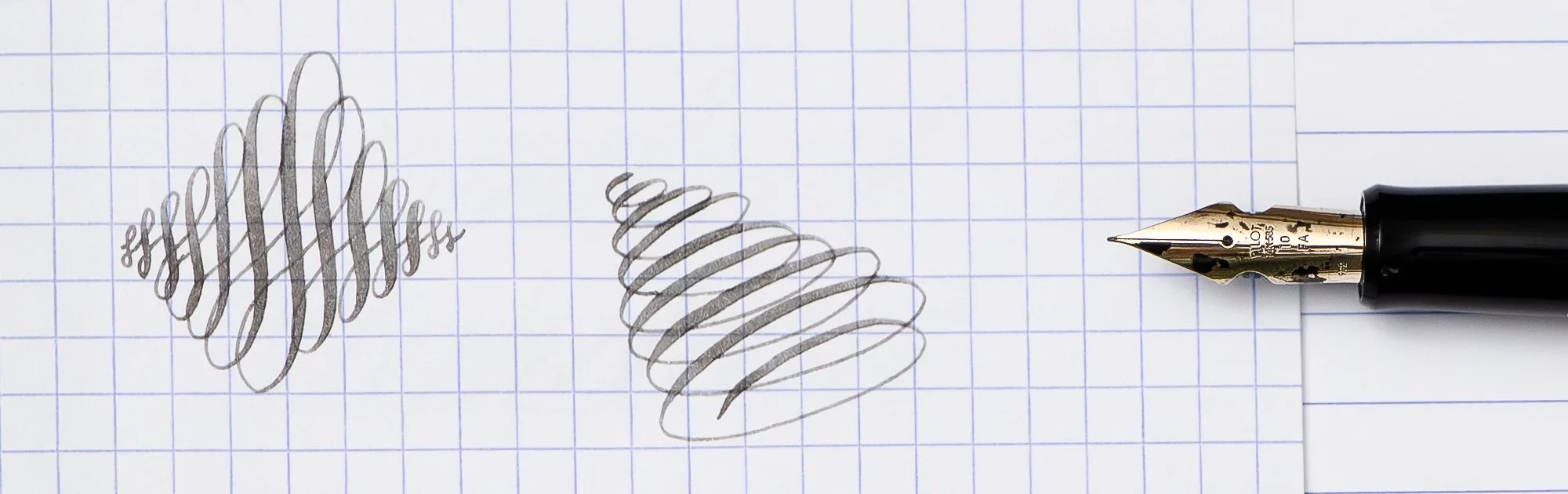
Paper: Rhodia A4 grid paperpad; Ink: Ferris Wheel Press Leadcast Letters
For some people, Pilot 912 with FA nib may not be the best beginner friendly flex nib fountain pen because of its cost. Yet, it is still frequently mentioned and recommended when someone is looking for a well-made modern flex nib. The overall build quality feels exceptionally refined. You can notice the details from the well polished resin to evenly finished clip, cap band and nib. The nib when unflexed is exceptionally smooth. Everything simply works. This is a well-made pen and it deserves its premium price tag.
In fact, I often find myself reaching for this pen more frequently than I originally expected, not because it produces the widest lines, but because it is such an enjoyable writing experience overall.
Pros
Outstanding build quality
Extremely smooth writing (as long as you don’t spring or misalign the nib)
Line variation is relatively easy to access
Compatible with aftermarket ebonite feeds
Cons
The biggest drawback is cost. With recent price increases, the Pilot has become significantly more expensive than when it was originally introduced.
To achieve its full potential, replacing the stock plastic feed with a third-party ebonite feed is almost a must. That adds additional cost.
Compared with the FPR, it provides less line variation. It also requires more care in flexing since the FA nib was not designed for western calligraphy.
Majohn Steel Flex Nib – The Most Accessible Entry into Flex Writing
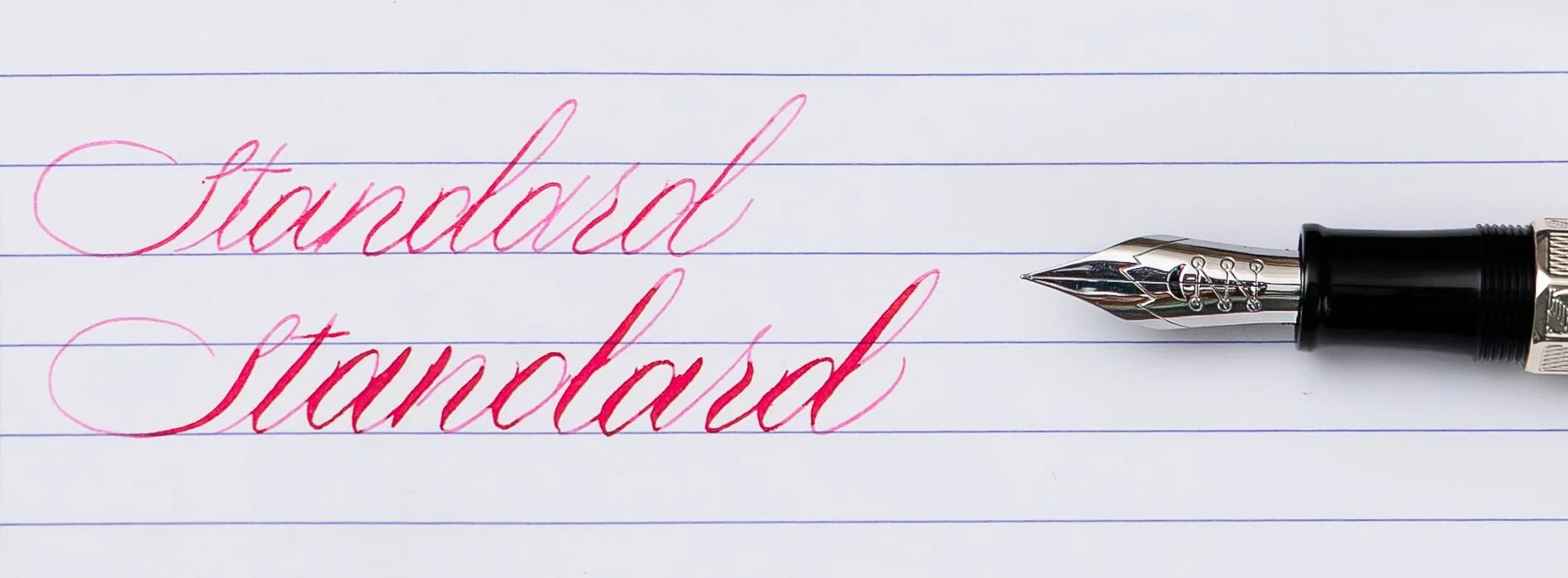
Paper: Rhodia A4 lined paperpad; Ink: Kobe #78 Rokko Alps Pink
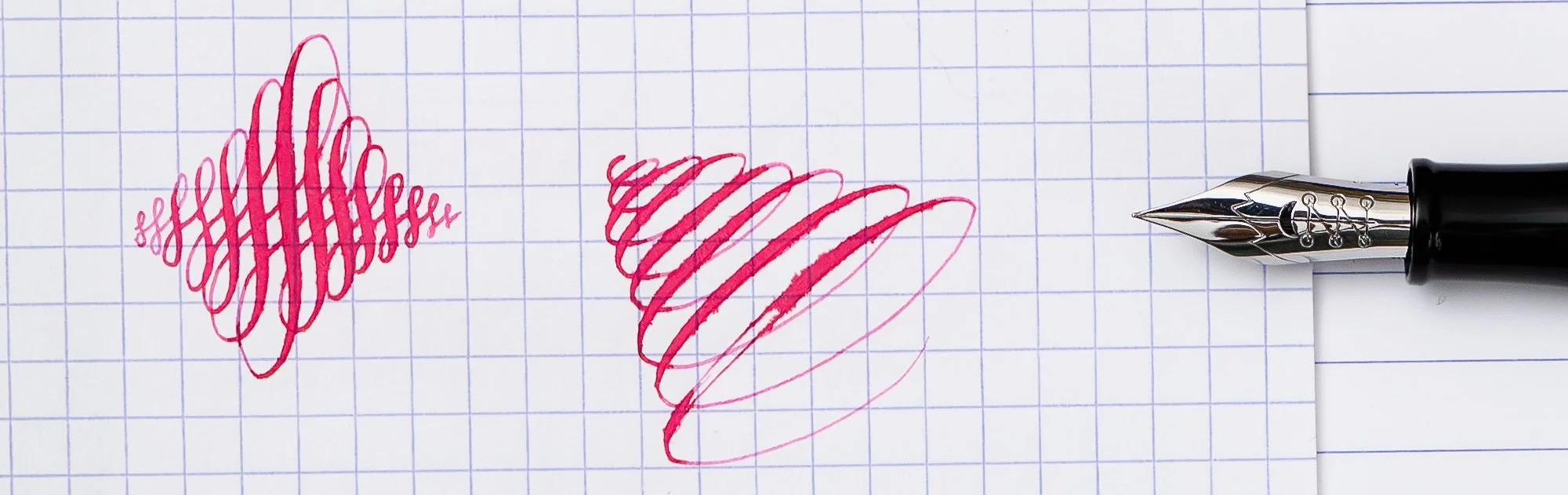
Paper: Rhodia A4 grid paperpad; Ink: Kobe #78 Rokko Alps Pink
The Majohn steel flex nib is by far the most affordable option in this comparison, yet it performs a lot better than its price would suggest. For adding slight line variation to your everyday writing, it doesn’t require too much pressure and it is remarkably smooth. It behaves almost like an ordinary bouncy fountain pen nib until you decide to flex it. That makes it far less intimidating for someone who has never used a flex nib before.
Pros:
Lowest price
Very smooth everyday writing
Easy transition from regular writing into flex writing
Cons:
The trade-off is stiffness. Although marketed as a flex nib, it behaves much closer to a semi-flex. To reach maximum line variation requires significantly more pressure than the FPR or Pilot. That extra force also increases the likelihood of railroading if pushed too aggressively. Ink flow is highly dependent on the combination of nib, feed, and filling system.
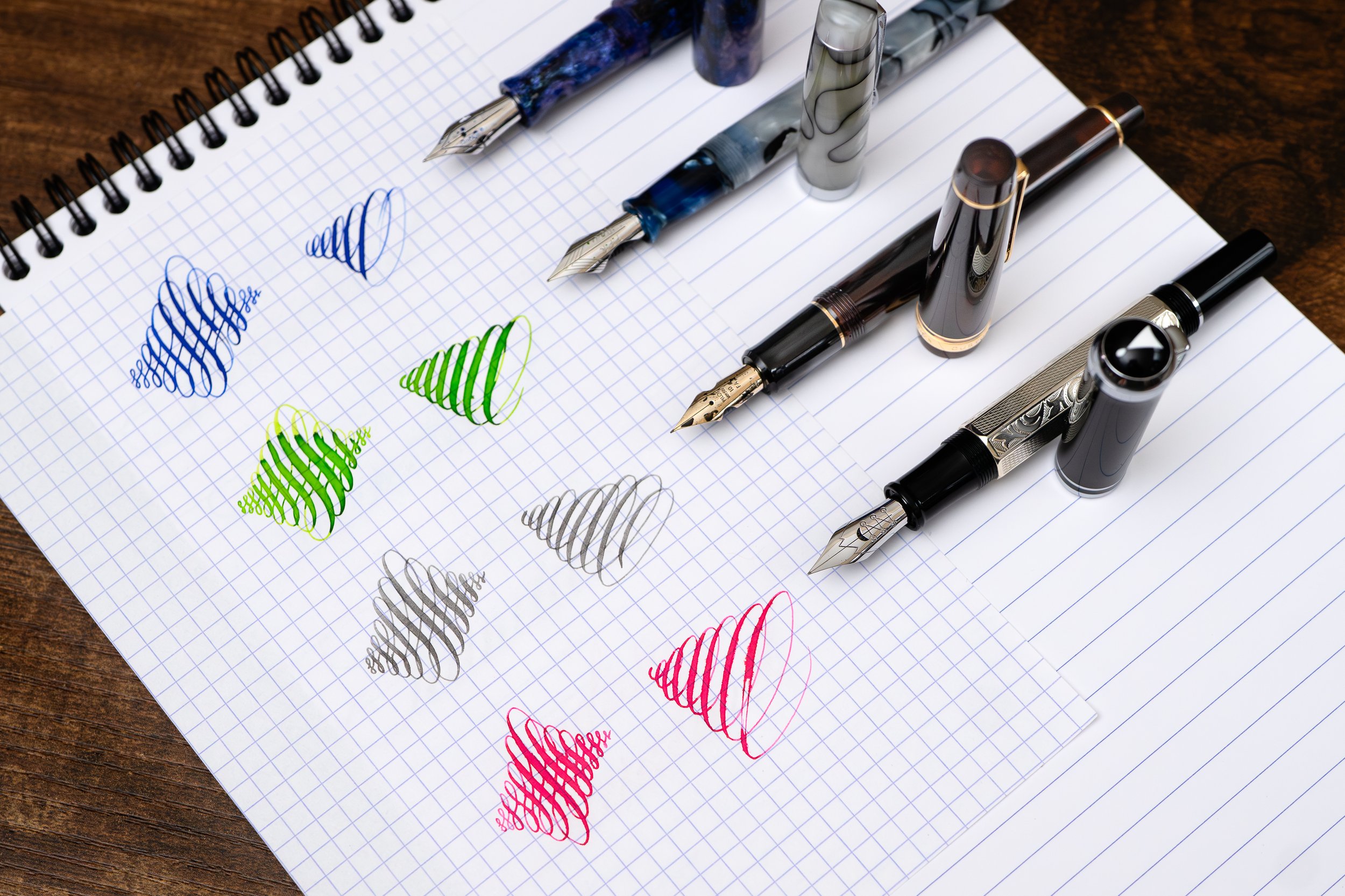
FAQ: Which One Should You Choose?
I actually don't think there is a universal winner. Instead, your decision depends on what you hope to accomplish.
If your goal is learning expressive calligraphy...
Choose the FPR Ultra Flex.
Its softness and line variation remain unmatched for the money.
If you're simply curious about flex writing...
Choose the Majohn or the FPnibs semi-flex.
Both provide a gentle introduction without requiring the investment of a premium gold nib.
If you want a premium writing instrument that also flexes...
Choose the Pilot Custom 912 FA.
It offers the most refined overall writing experience in this comparison.
If line variation is your highest priority and budget matters...
The FPR remains the obvious choice.
If overall writing experience matters more than maximum line width...
The Pilot becomes much easier to justify.
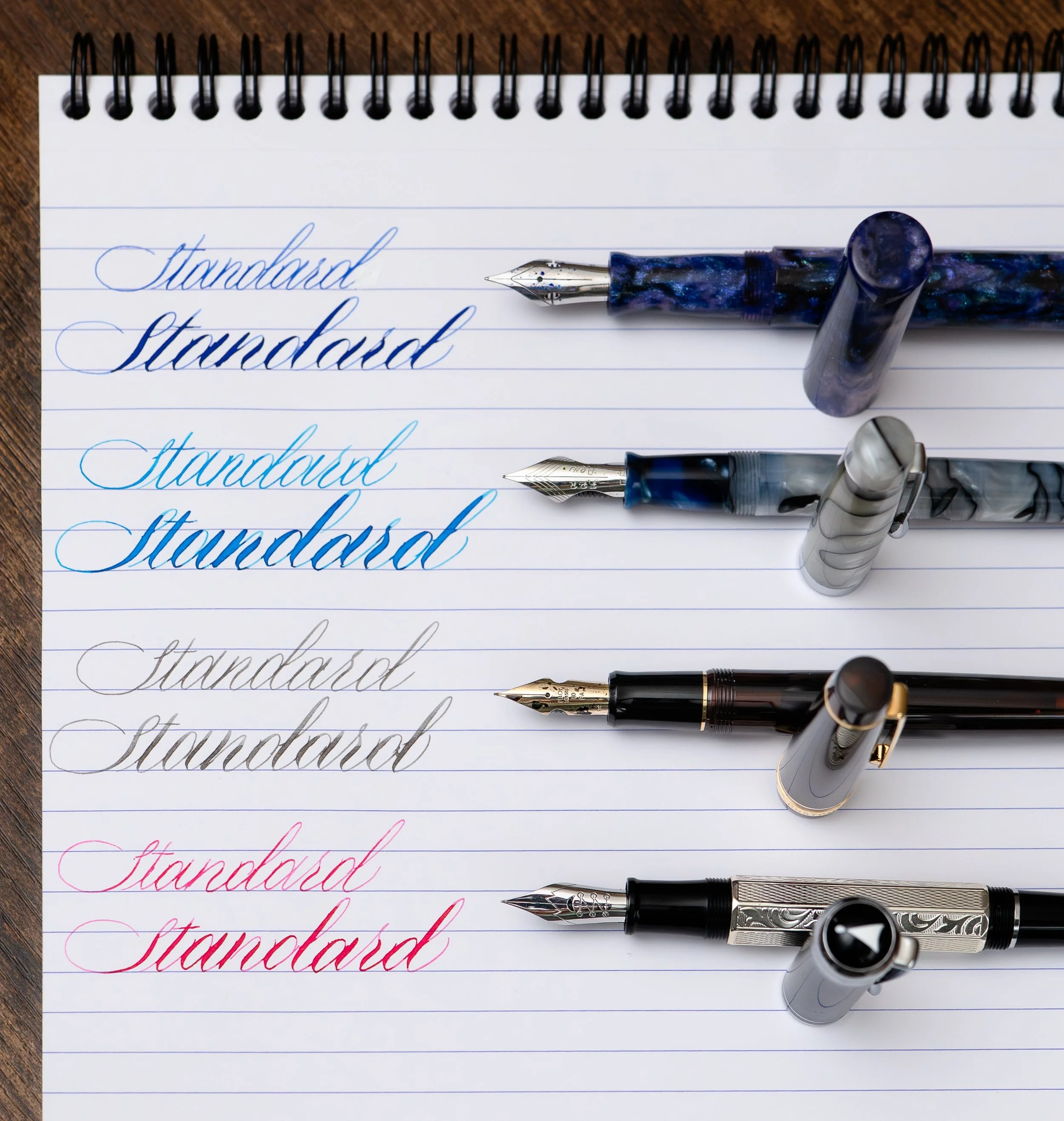
Some Final Thoughts
One point I'd like to emphasize is that none of these pens are a "wrong" choice. Each of them teaches something different about flex writing. Your first flex fountain pen is unlikely to be your last. Instead, it helps you discover what you personally value:
softness
snapback
line variation
everyday comfort
pen quality
reliability
Once you understand your own preferences, choosing your next flex nib becomes much easier. And perhaps that's the real goal of a beginner-friendly flex pen, not to be perfect, but to help you discover what kind of writer you want to become.