Flex Review: Majohn (Moonman) Stainless Steel Flex Nib — Is Majohn flex nib good for flex beginners?
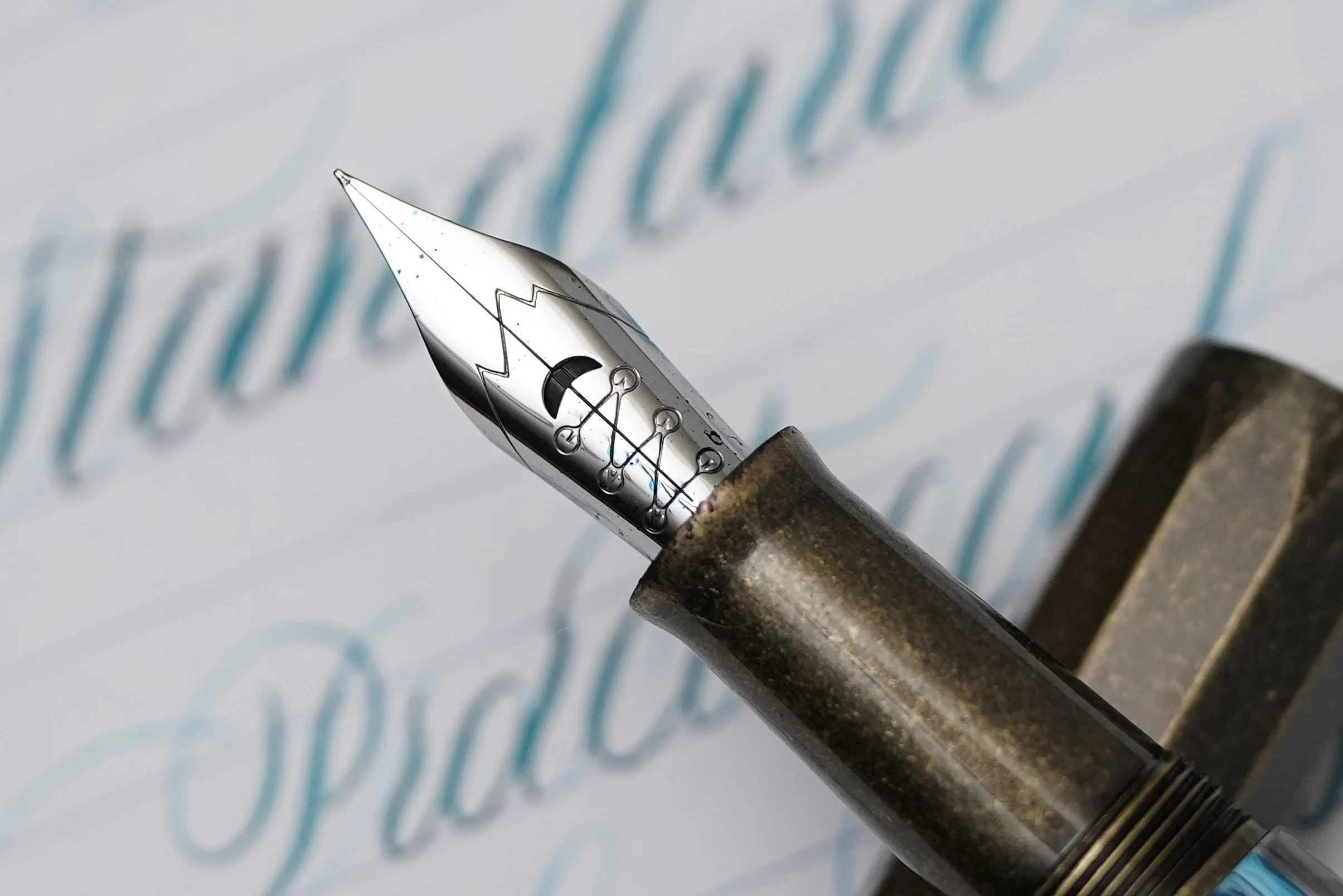
I know many people are curious about Majohn’s latest release—a steel flex nib. It’s somewhat surprising to see Chinese pen manufacturers producing flex nibs, since flex writing is not particularly suited to Chinese calligraphy, in my opinion. Either way, it’s great to see more companies attempting to make flex nibs. It keeps the hobby interesting.
I’ve been using this nib for a little over a week now and have tested it across different pens. I think I’ve spent enough time with it to report back on its performance.
Disclaimer:
Originally, I planned to purchase this nib myself, but Shanghai Jingdian Stationery (上海晶典文具社) offered to send me a tester unit (a P138 with two nibs). Although the nib is produced by Majohn/Moonman, it was first released through Shanghai Jingdian Stationery and is still not available on Majohn’s Taobao store. It’s unclear whether this is an exclusive production.
The nibs were provided by the seller; however, this review is based entirely on my own writing experience.
For flex nib reviews, I follow a systematic approach. Below is a breakdown of the key flex parameters:
Flexibility — How Wide It Flexes
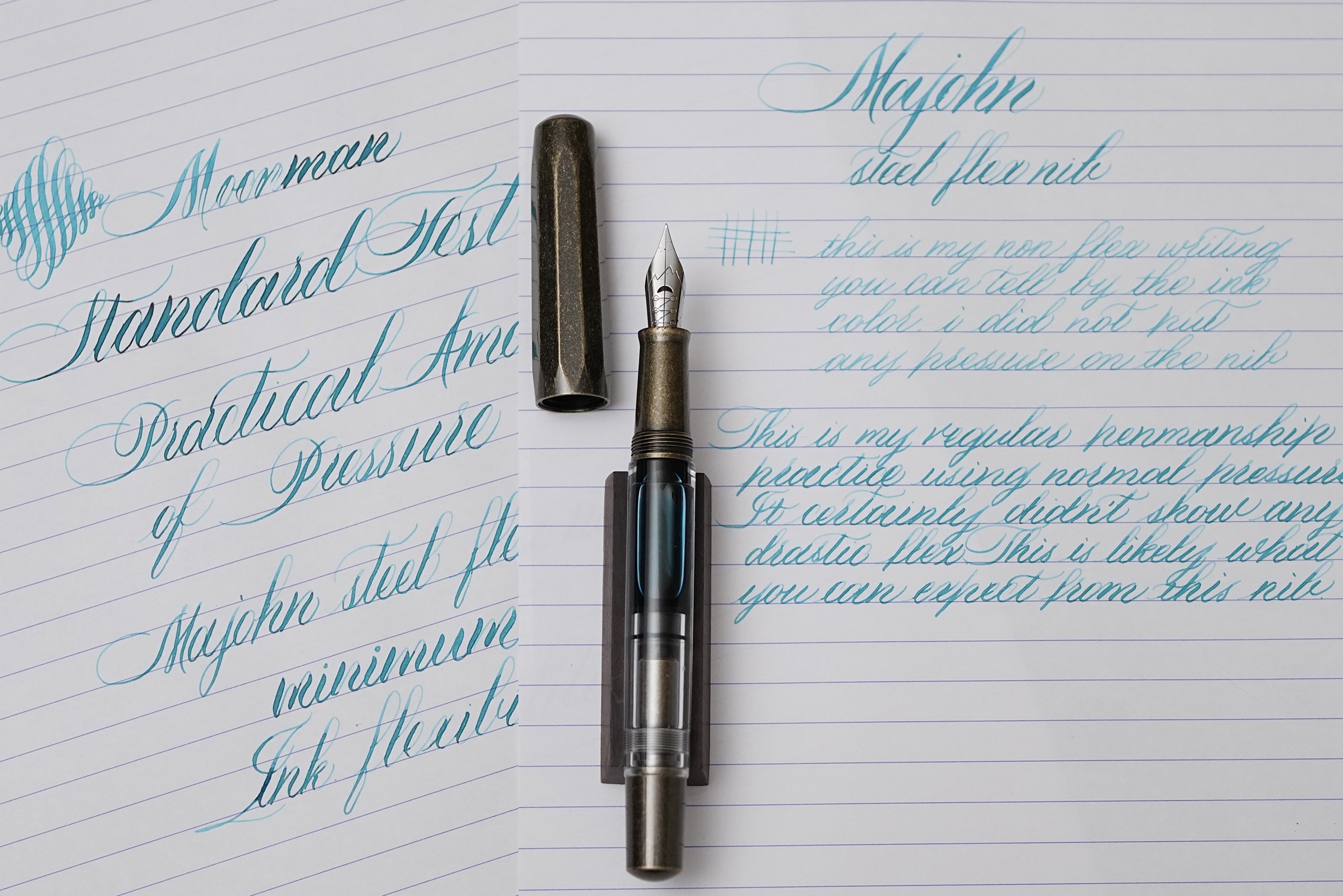
The maximum line width reaches approximately 1.5~1.6 mm, but the pressure required to achieve this is not sustainable. In fact, the force needed to approach the maximum flex would spring most of my other flex nibs.
A more practical maximum flex is closer to 1.3~1.4 mm and I would classify this nib as a semi-flex rather than a true full-flex nib.
Majohn Steel Flex Nib with Flex Writing (top 2 rows demonstrating maximum flexing)
Paper: Rhodia A4 lined paper, line width 8mm; Ink: Diluted Iroshizuku Kujaku
Softness — Pressure Required to Flex
For semi-flex performance (around 1.2~1.3 mm), I would rate the softness at 4~4.5 on my Flex Nib Table. It is comparable to the Pilot 743 FA, though still noticeably stiffer than the FPR steel ultra-flex nib.
However, when pushing toward maximum flex, the effective softness drops to below 3. The stiffness increases exponentially, to the point where sustained use at that range causes noticeable hand fatigue. It becomes difficult to assign a precise rating due to how abruptly the resistance increases.
Snapback — Return Speed of the Tines
The snapback is on the slower side, which is expected from stainless steel. It is very similar to FPnibs’ JoWo #6 steel semi-flex nib. Therefore, I would rate it around 5.8 on my Flex Nib Table. Achieving crisp line transitions requires deliberate control and technique.
Hairlines & Smoothness
Normally, I evaluate these separately, but for this nib, it makes more sense to discuss them together. This is probably the smoothest flex nib I’ve tried so far. Its smoothness is on par with the Pilot 912 FA. Because the nib requires more pressure to flex, I expect this smoothness to be more durable over time since the tines are less prone to misalignment compared to the 912 FA.
When not flexing, the nib writes like a buttery-smooth EF–F nib.
Although marketed as an EF nib, Majohn uses a custom grind on the tipping, increasing the contact surface with the paper. This contributes significantly to its smoothness, especially during flex.
The trade-off is that the unflexed line width leans closer to a fine rather than a true EF. The minimum line width is approximately 0.4 mm.
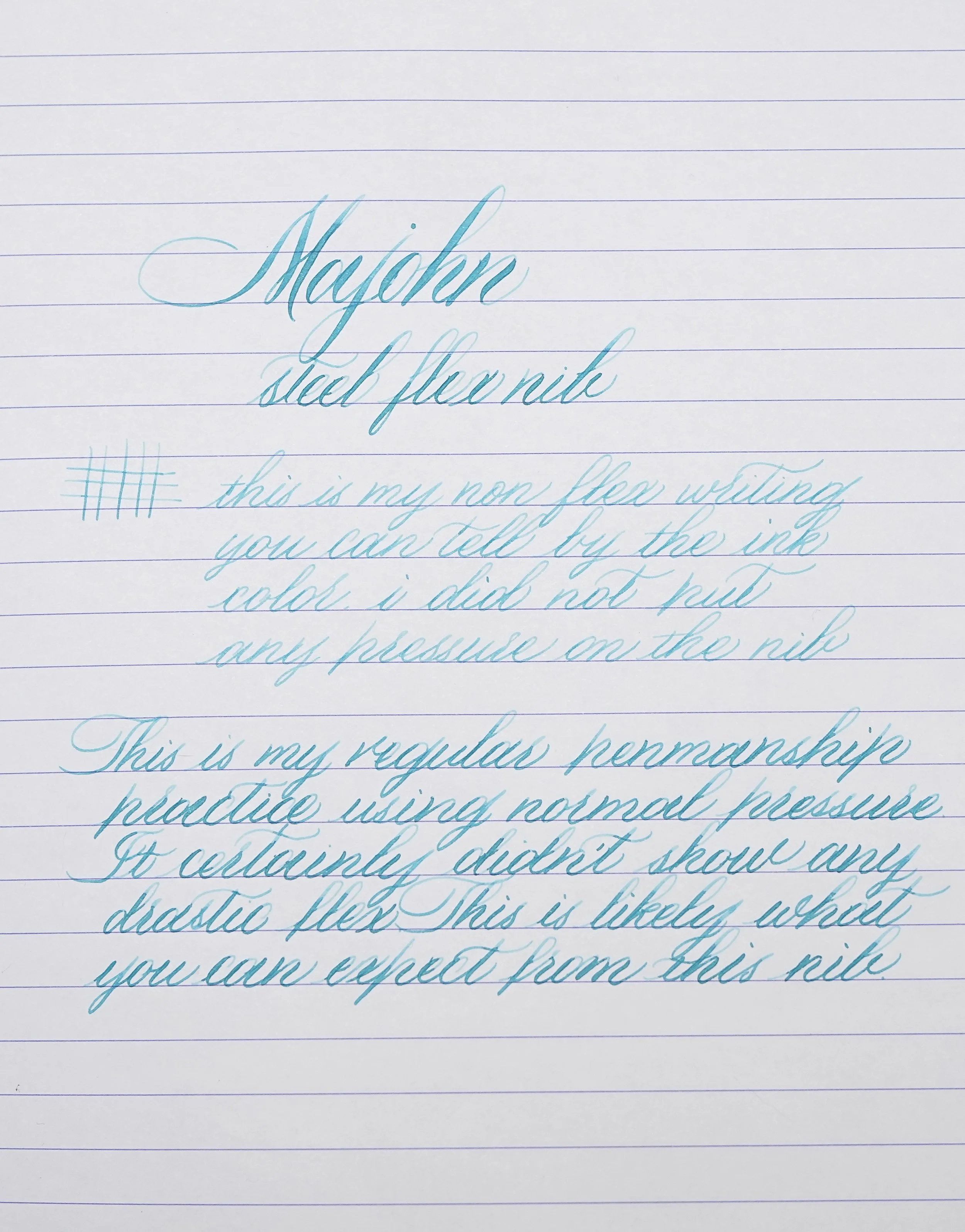
Paper: Rhodia A4 lined paper, line width 8mm; Ink: Diluted Iroshizuku Kujaku
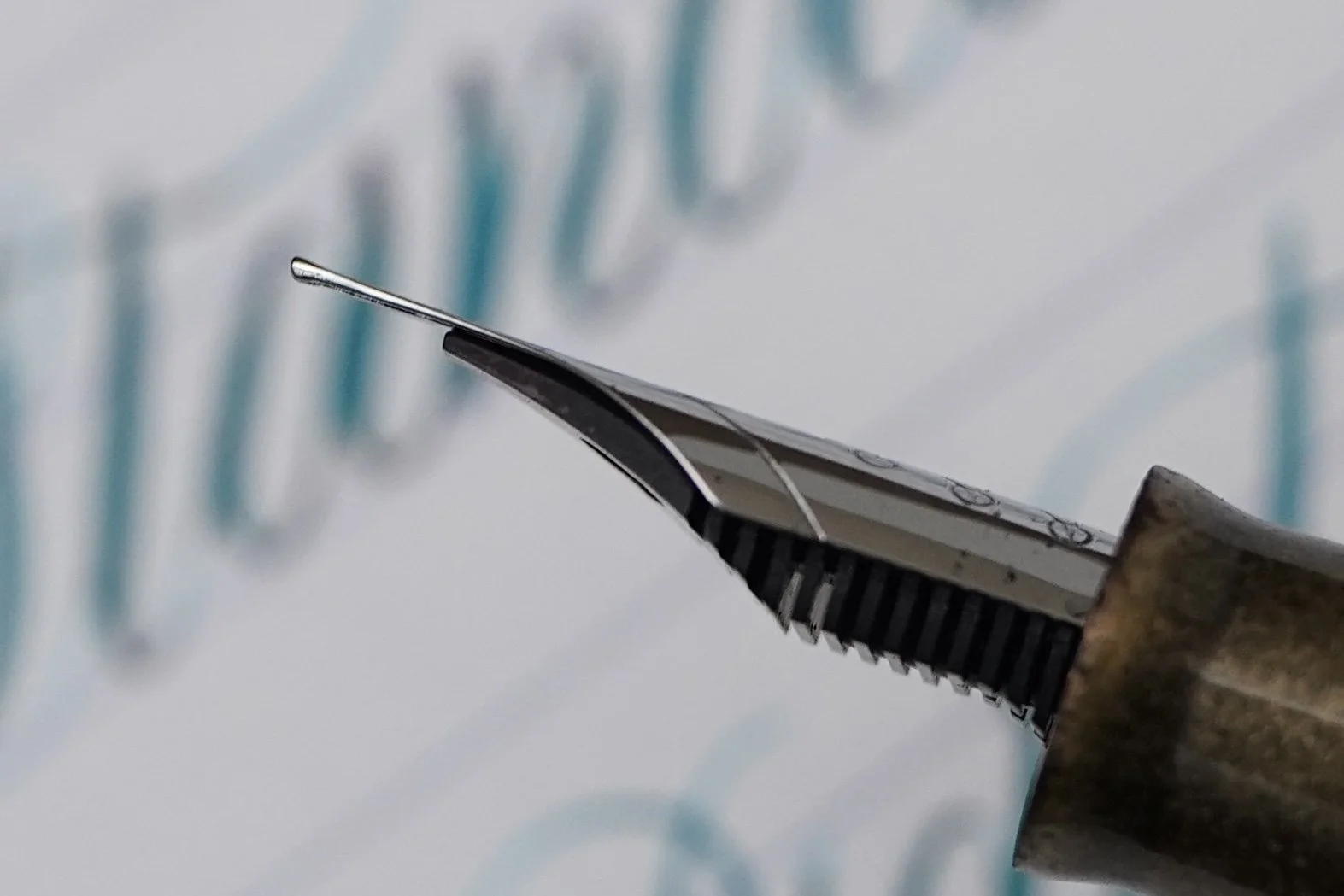
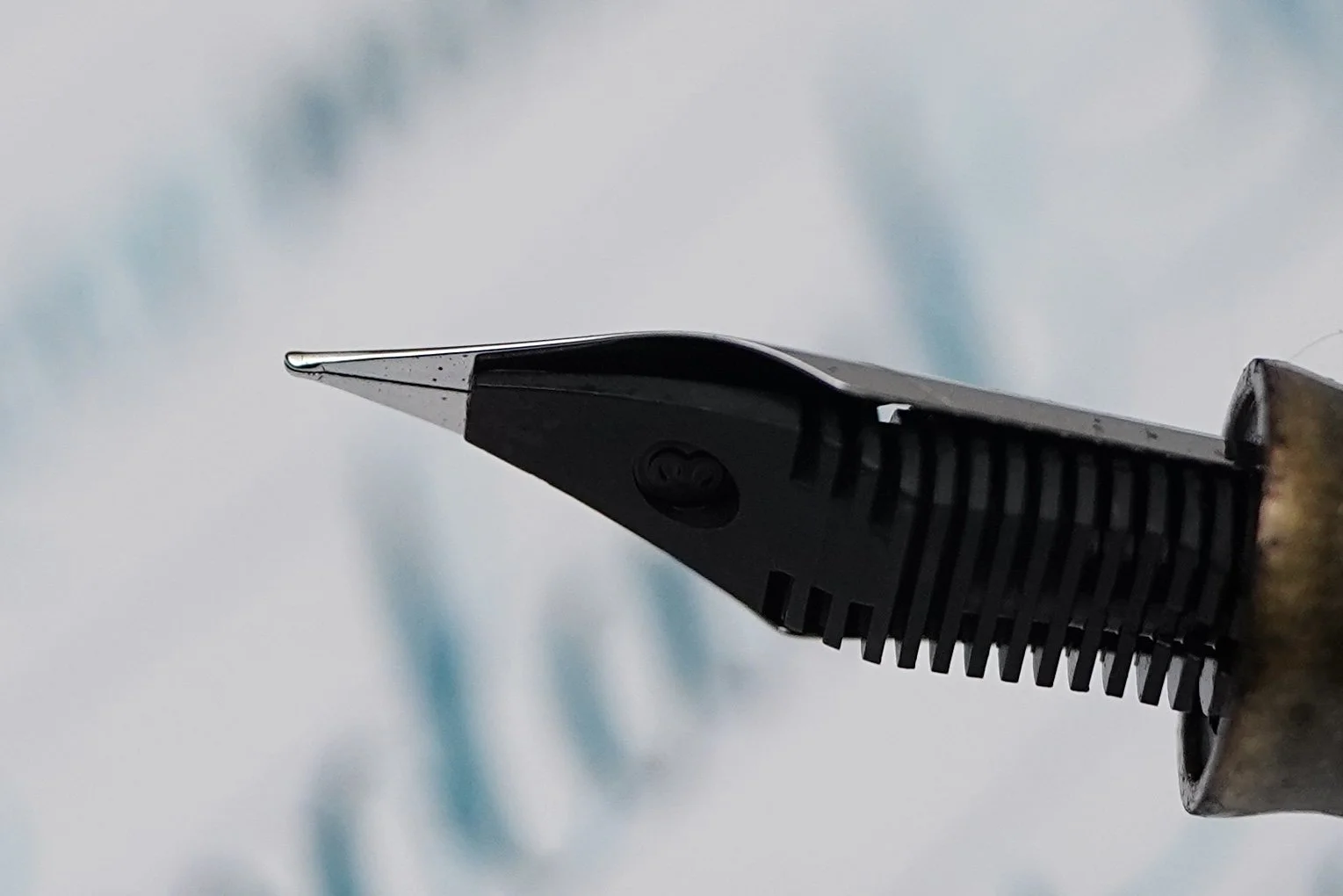
Ink Flow
Ink flow is highly dependent on the feed and filling system.
The best performance I achieved was with a Hongdian A6 (piston filler) paired with an ebonite feed, which effectively eliminated railroading.
With plastic feeds such as on the Majohn T1, railroading occurs when flexing quickly or using drier inks. However, under semi-flex usage, railroading is relatively infrequent.
To improve flow:
Use wetter inks (e.g., Iroshizuku inks)
Prime the feed when pushing for wider flex
Consider upgrading to an ebonite feed if possible
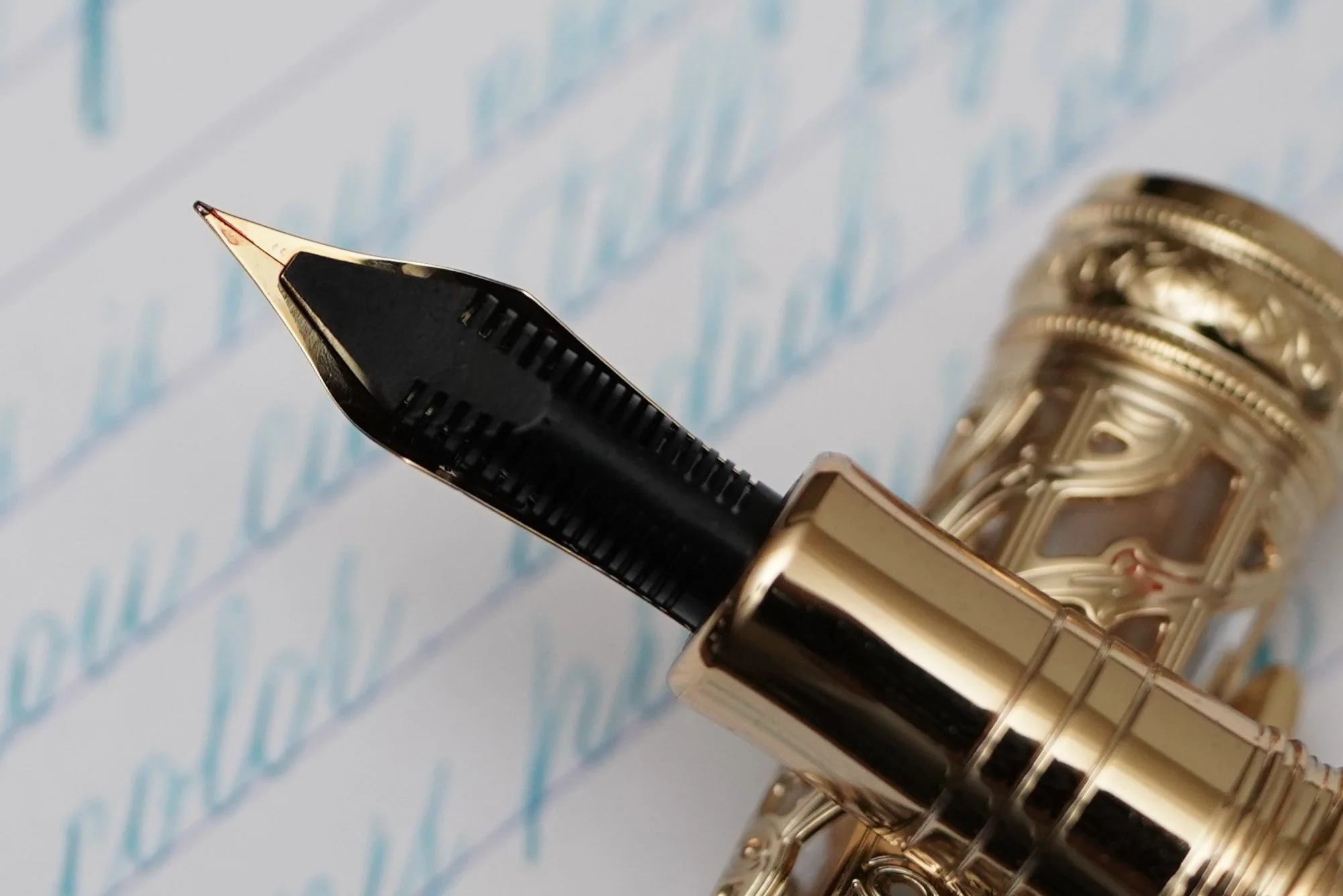
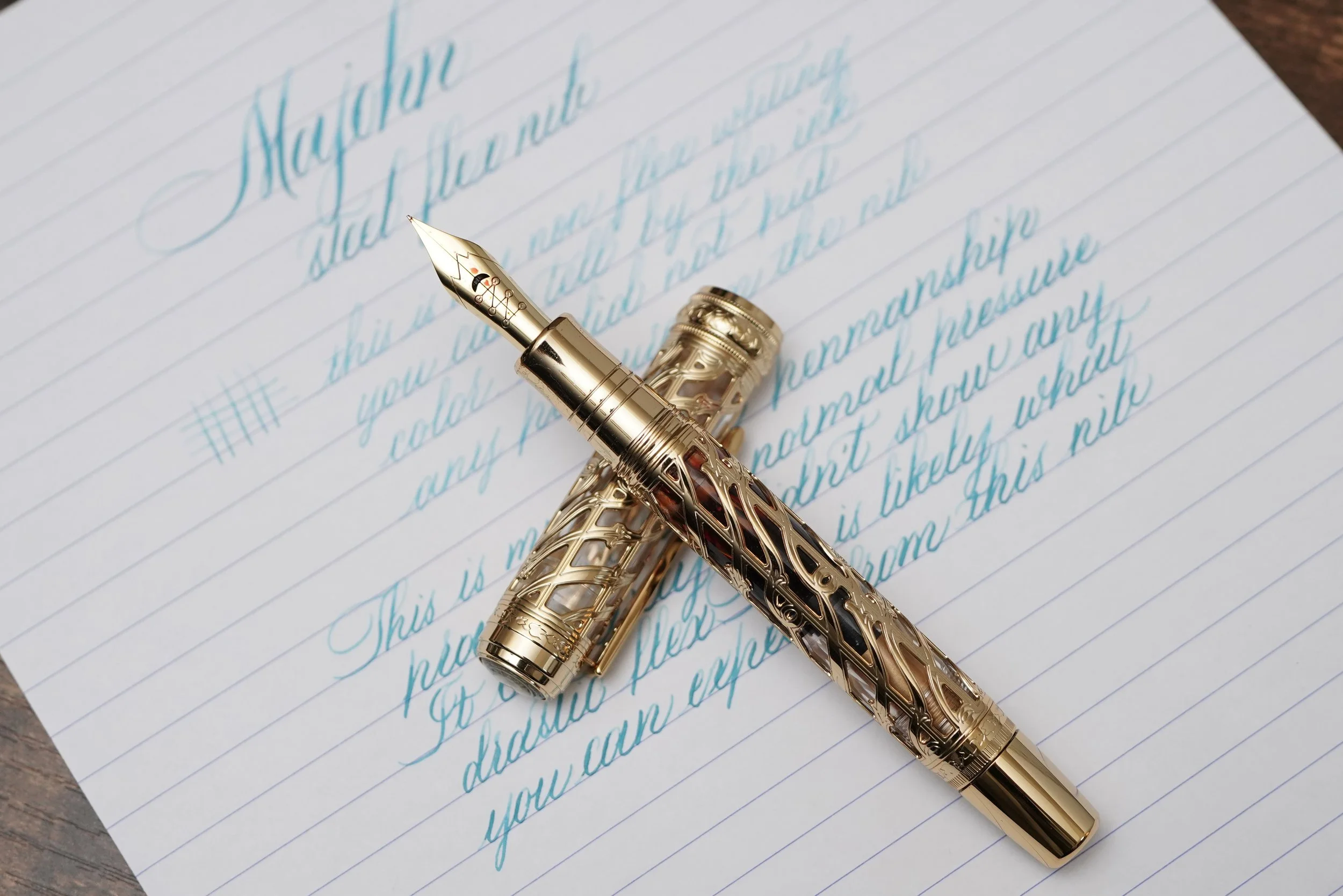
My Thoughts on This Nib
Majohn markets this as a full-flex nib, but I would personally classify it as a semi-flex nib.
Yes, it can technically reach around 1.6 mm, which falls within full-flex territory. However, the pressure required to get there is excessive, enough to risk damaging most other flex nibs. Practicing full flex with this nib quickly leads to hand fatigue, or even strain.
If you are specifically looking for a true full-flex experience, I would NOT recommend this nib.
However, if you are comfortable with semi-flex performance, or simply want a soft, expressive nib for everyday writing, I would highly recommend it.
For non-flex writing, it reminds me of a vintage gold nib experience:
Firm enough to prevent unintended flex
Soft and bouncy under light pressure
Exceptionally smooth on paper
In that sense, it excels more as a daily writer with character rather than a dedicated flex tool.
Final Verdict
For the price point, this nib is extremely accessible. At under 10 CAD per nib on AliExpress, it offers excellent value for anyone looking to explore different nib characteristics.
However, for beginners specifically seeking a true flex nib experience, I would still recommend the FPR steel ultra-flex nib as a better starting point.
That said, if your goal is:
A smooth writing experience
A soft, slightly expressive nib
An affordable entry into flex-adjacent writing
Then this is one of the most compelling options currently available.
BONUS ⬇️⬇️⬇️
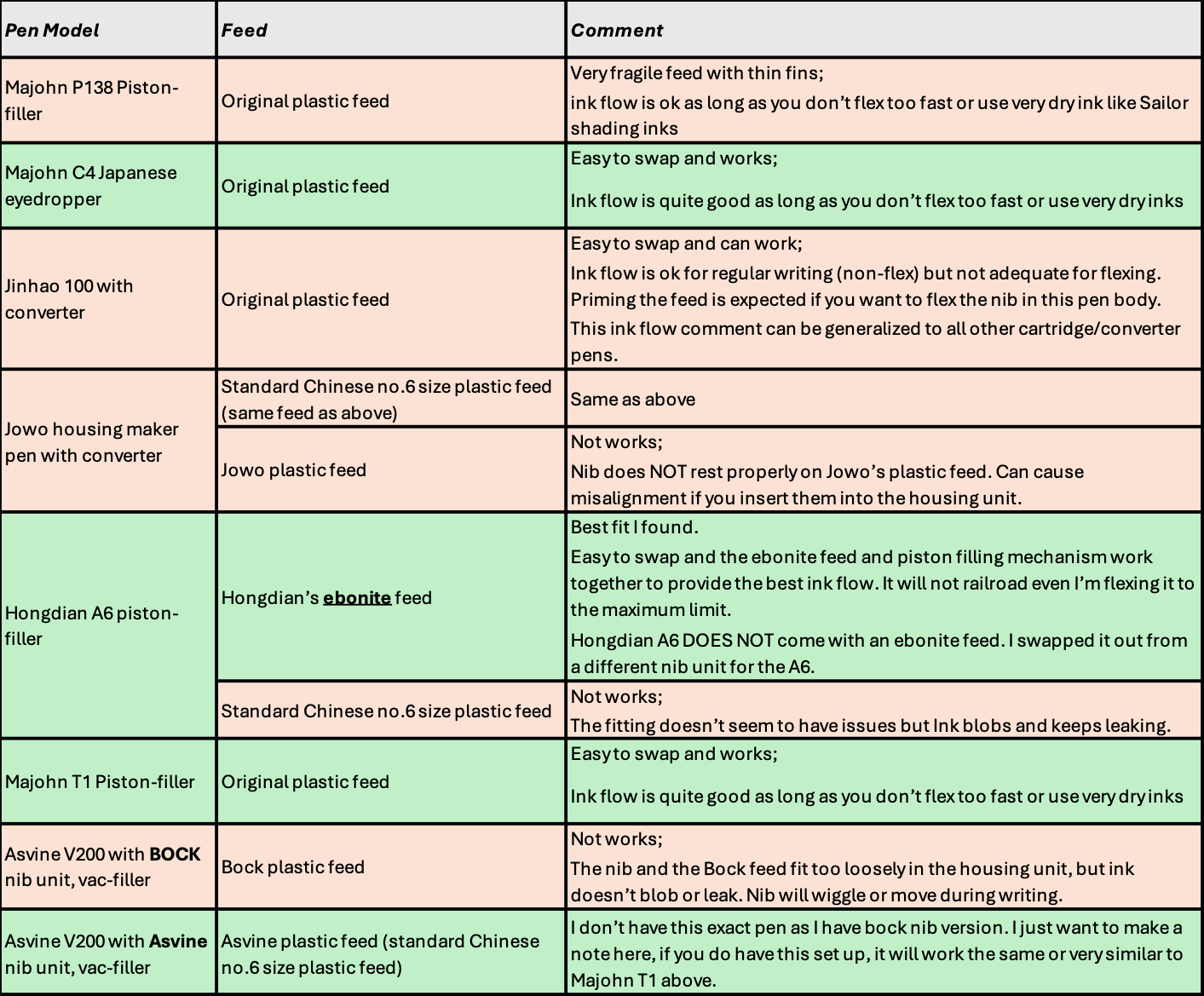
Frankenpen tips:
I have tried swapping these 2 nibs on many different pen bodies. To save you guys some work, here is a compiled list of what works and what doesn’t. Results can be generalized to different pen models with the same filling mechanism.